
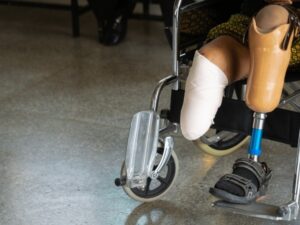
Finding out what an artificial leg below knee price in South Africa actually looks like is harder than it should be. There’s no standard price list sitting on a website somewhere. Costs vary wildly depending on the type of prosthesis, who fits it, what materials are used, and whether you’re going through medical aid or paying out of pocket. If you or someone close to you is navigating this for the first time, it can feel overwhelming before you’ve even started.
This guide tries to make that clearer. No promises about specific outcomes, but at least you’ll know what questions to ask and what numbers are realistic.
Quick Answer
A basic below-knee prosthetic limb in South Africa typically starts from around R15,000 to R30,000 for an entry-level functional device. Mid-range prostheses with better components and materials run between R40,000 and R100,000. High-end or activity-specific limbs can cost R150,000 or more. Medical aid, government facilities, and NGO support can significantly reduce or eliminate out-of-pocket costs depending on your situation.
What a Below-Knee Prosthesis Actually Is
A below-knee prosthesis, also called a transtibial prosthesis, replaces the limb from below the knee downward. Because the knee joint is still intact, people with below-knee amputations generally have better functional outcomes than those with above-knee amputations, and the devices are somewhat less complex.
That said, “less complex” is relative. A prosthetic limb isn’t just a shaped piece of plastic. It involves a socket (custom-fitted to your residual limb), a pylon or structural component, a prosthetic foot, and in many cases a suspension system that keeps everything in place while you move. Each of those components has its own cost, and each can be upgraded separately.
The fitting process matters just as much as the device itself. A poorly fitted socket, regardless of how expensive the rest of the prosthesis is, will cause pain, skin breakdown, and functional problems. This is why where you go and who fits you is as important as what you buy.
How the Pricing Actually Works
Prosthetic pricing in South Africa is structured differently depending on the route you take.
Government or Public Healthcare Route
Through government facilities, specifically facilities linked to the Department of Health, amputees can access basic prosthetic devices at low or no direct cost. The waiting periods can be significant, sometimes months. The devices provided are generally functional but basic. Upgrades or specialised components are typically not available through this route.
For many people, this is the only financially viable option, and the prostheses provided do allow for basic mobility. It’s not perfect, and the waiting lists are a genuine problem, but the system exists and it is accessible.
Medical Aid Route
This is where things get complicated. Medical aid schemes in South Africa do cover prosthetic limbs, but the level of cover varies enormously between schemes and plan types.
Under the Prescribed Minimum Benefits (PMB) regulations, amputations resulting from certain defined conditions must be covered by medical aids, including the provision of a basic prosthetic device. However, “basic” is the operative word here. If you want a more advanced prosthetic foot or a lightweight carbon fibre component, that may fall outside what your scheme will authorise.
Common medical aid schemes that provide some level of prosthetic cover include Discovery Health, Bonitas, Momentum Health, and Medihelp, among others. Most will require pre-authorisation, a referral from a doctor or surgeon, and assessment by a registered prosthetist.
A registered prosthetist in South Africa must be registered with the Health Professions Council of South Africa (HPCSA). Always check this before proceeding.
Private Pay Route
If you’re paying fully out of pocket, you have the most freedom in terms of device choice, but also the most exposure to cost. Here’s a rough breakdown of what different categories of below-knee prosthesis tend to cost privately:
Basic functional prosthesis (SACH foot or similar): R15,000 to R35,000 including fitting and socket fabrication.
Intermediate prosthesis with energy-return foot: R40,000 to R80,000. These are significantly more comfortable and functional for active daily use.
Advanced carbon fibre or activity-specific prosthesis: R80,000 to R200,000+. These are designed for people who want to run, cycle, or engage in sport.
Paediatric prostheses have their own cost considerations because children grow, meaning the device needs to be replaced relatively frequently, sometimes every 12 to 18 months. This can make annual costs higher than the device price suggests.
Key Factors That Affect Artificial Leg Below Knee Price in South Africa
The Socket
This is the most personalised part of the prosthesis, custom-made to fit your specific residual limb. It’s often the most critical component for comfort and function, and it has to be remade periodically as the residual limb changes shape, especially in the months immediately following amputation.
Socket fabrication alone can cost R8,000 to R20,000 privately, depending on the materials and technique used.
The Prosthetic Foot
This is the component most people focus on because it has the biggest visible impact on walking ability. Options range from basic solid-ankle cushioned heel (SACH) feet at a few thousand rand to advanced dynamic response carbon fibre feet that can cost R30,000 to R80,000 on their own.
The Prosthetist’s Fees
Fitting, alignment, and follow-up appointments are separate from the device cost in many cases. Expect ongoing appointments, especially in the first six months, as the residual limb changes and the fit needs to be adjusted.
Location
Prosthetists in major urban centres like Johannesburg, Cape Town, Durban, and Pretoria tend to have more options and more experience with complex fittings. Rural areas may have limited access, which can mean travel costs on top of device costs.
Hidden Costs People Often Don’t Anticipate
Most people ask about the upfront cost of the prosthesis and forget to budget for what comes after.
Replacement liners and sleeves: The silicone liner that goes between your residual limb and the socket typically needs replacement every three to six months. These cost between R2,000 and R8,000 each depending on the type.
Socket replacements: As your residual limb stabilises and changes shape, the socket may need to be remade entirely. This is common in the first year post-amputation.
Repairs: Prosthetic components break and wear out. Carbon fibre feet can crack. Pylons can fail. These repairs have costs.
Rehabilitation and physiotherapy: Getting functional with a prosthesis isn’t automatic. Physiotherapy to learn to walk properly and build strength is usually essential, and it has costs of its own.
Common Mistakes People Make
Buying Online Without Professional Fitting
You’ll find prosthetic components for sale online, sometimes significantly cheaper than what a South African prosthetist charges. This might seem like a good deal. It’s usually not. A prosthesis that isn’t properly fitted to your specific anatomy can cause serious skin damage, falls, and long-term musculoskeletal problems. The device is not the hard part. The fitting is.
Assuming Medical Aid Will Cover Everything
I’ve seen people go into this expecting their medical aid to handle it and then get a large bill they weren’t prepared for. Always call your scheme and get specific pre-authorisation and benefit information in writing before any device is ordered. Ask specifically what rand limit applies and whether the exact product being proposed is covered at scheme rate.
Delaying the Process Too Long
Some people, often out of grief or shock following an amputation, delay engaging with prosthetic rehabilitation significantly. From a medical standpoint, earlier fitting generally leads to better functional outcomes. The residual limb is more stable and easier to fit in a predictable way after a few weeks, but waiting years can complicate things.
How to Navigate the Decision
If you’re deciding between routes, here’s a practical way to think about it:
Start with your medical aid if you have one. Get the pre-authorisation process going and find out exactly what they’ll cover and at what rand value. Then consult with at least two registered prosthetists to get assessments and quotes.
If you don’t have medical aid, contact your nearest government hospital’s rehabilitation department first. Also look at NGOs operating in this space in South Africa, including the Amputee Society of Southern Africa (ASSA), which provides information and in some cases support for people navigating this system.
Don’t make any decisions purely on price. A cheaper device that doesn’t fit properly or isn’t appropriate for your activity level will cost you more in the long run through repairs, medical appointments for skin issues, and the eventual need for a proper device anyway.
Real-World Scenarios
A 45-year-old teacher in Gauteng who lost her leg below the knee following a vehicle accident: Her medical aid covered a mid-range device under the Road Accident Fund (RAF) claim associated with the accident. The RAF has its own prosthetic funding pathway for road accident victims, which many people don’t know about. She ended up with a carbon fibre foot and a well-fitted socket at no direct cost to her, though the process took several months.
A 60-year-old diabetic man in KwaZulu-Natal whose amputation followed complications from diabetes: He was on a hospital plan only. His scheme covered a basic SACH-foot prosthesis at a limited benefit rate. He paid roughly R12,000 out of pocket for upgrades and the fitting gap after the scheme rate was applied.
A 19-year-old student who lost his leg in a sports accident: He was uninsured at the time. He accessed a device through a government rehabilitation centre after a four-month wait. The basic device allowed him to walk but wasn’t suitable for sport. He is currently fundraising toward an activity-specific prosthesis.
The artificial leg below knee price in South Africa spans a wide range, and where you land on that spectrum depends on factors you can actually influence: which funding route you access, how well you prepare for the process, and whether you work with qualified professionals throughout.
The single most important thing is to engage with a registered prosthetist early. Not a salesperson. Not a general practitioner making a referral to whoever they know. A properly registered prosthetist who takes the time to understand your activity level, your lifestyle, and your budget before recommending a device.
It’s also worth knowing that prosthetic technology has improved significantly. People with below-knee amputations who are properly fitted and rehabilitated can run, hike, cycle, and live fully active lives. The financial piece is real and it’s stressful, but it’s also solvable in most cases with the right information and some persistence.
This article is for general informational purposes only and does not constitute medical or financial advice. Please consult a registered healthcare professional or prosthetist for guidance specific to your situation.
